 The AREDN™ Project’s focus is Emergency Communications (EmComm). It seeks to provide hams a means to implement this technology in practical ways to support local and regional emergency communications needs. To that end, the project’s objectives are to enable hams to:
– Stand up a working mesh node with minimal expertise and effort
– Configure the mesh network automatically so that advanced network knowledge is not needed
– Use low-cost, reliable commercial equipment
– Define standards for internetwork integration
– Support those in the process of designing and implementing EmComm networks
– Refine the software to make implementation easier, more reliable, and more manageable
Features and Benefits
– Delivering quality, high-speed, data communications for Emcomm via Amateur Radio
– Exclusive Part 97 Channels AREDN™ offers two channels on 2.4 GHZ, 24 channels on 3.4 GHz, and 7 non-shared channels on 5.8 GHz that are not shared with Part 15 users
– Over-the-Air firmware upgrades Changes to firmware can be done over an RF link without physical access to the node
– Maximum data rate of 130 Mbps 802.11n has been added to the RF protocol. This improves the maximum data rate capability from 54 Mbps to 130 Mbps and allows AREDN™ nodes to take advantage of the Ubiquiti MIMO (concurrent data channels in both the vertical and horizontal polarization domains), although proportional data rate increases can also be achieved on non-MIMO devices
– Low investment entry
– Portable nodes with cable and network switches can be established inexpensively; backbone nodes with multiple transceivers and cables are affordable
– Rapid deployment and implementation
– Portable nodes can be set up in a few minutes
Multiple antenna choices
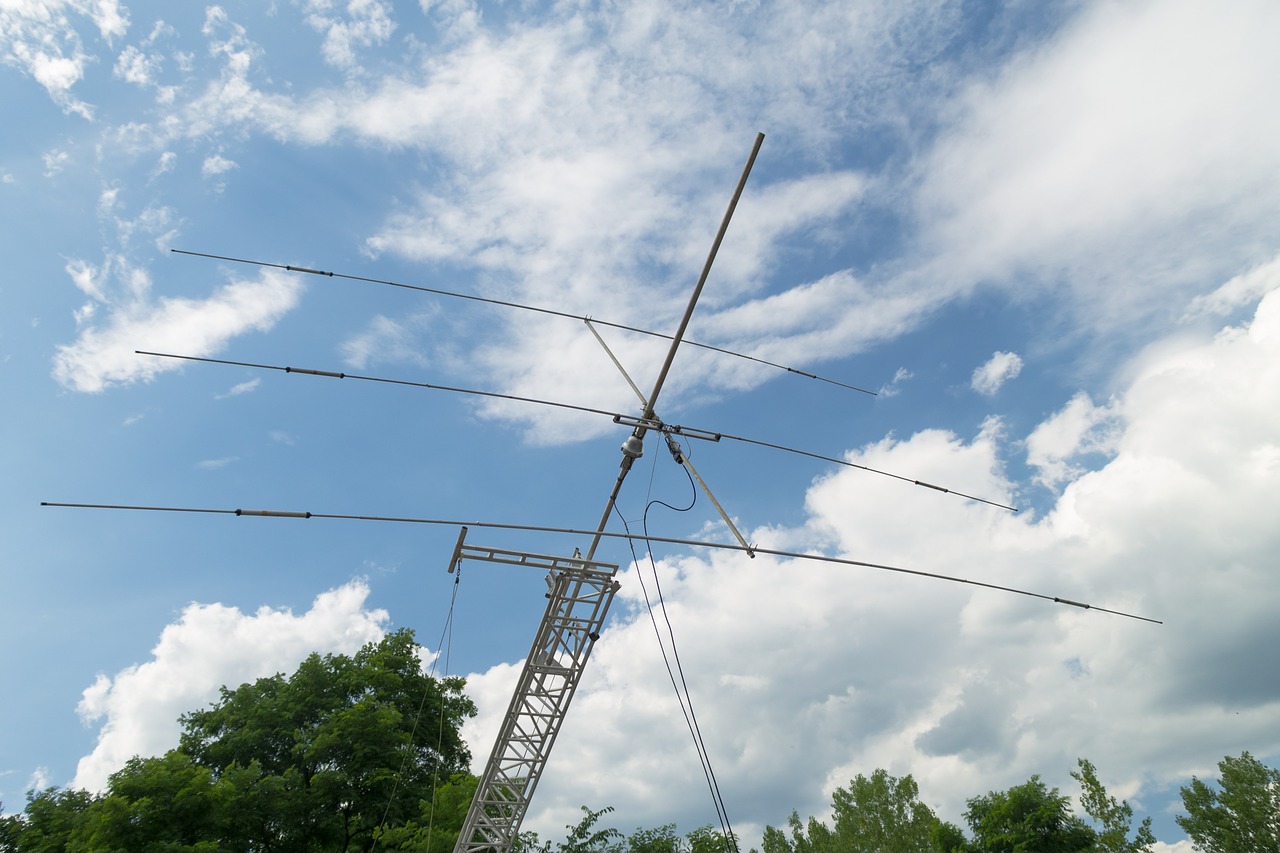
– There are many choices for sector (60-, 90-, and 120-degree) antennas and highly directional (Yagi and dish) antennas
Interfaces easily with other Internet-capable devices
– An AREDN™ network enables emergency responders to use familiar devices such as smartphones, tablets, and laptop computers
Practical EmComm Uses
– Many applications are available to support the critical communications requirements of CERT, law enforcement, ARES, RACES, and events such as fire and hurricane watches, shelter operations, search and rescue missions, damage assessment, public safety coordination, and disaster recovery efforts.
– Other uses include planned events and gatherings, such as fairs, races, and other large-scale events.
– Additional applications support situational awareness, real-time resource tracking, message routing between agencies, and redundant communications when traditional infrastructure is degraded or unavailable.
Telephones
– Voice over IP telephone systems
– SIP-based direct-dial calling to similarly configured smartphones within the network
– Gateway to PSTN when the Internet is available to a node
– Asterisk and FreePBX
Cameras
– Streaming video with IP webcams
– Skype-like video conferencing
– VideoChat
Keyboard to Keyboard
– Email
– Chat applications – MeshChat
Mapping
– Open Street Map.
– HTML mapping with Google APIs
Database and File Sharing
– CERT data gathering
– Cloud-based (OwnCloud) file sharing
– Google Person Finder
Network Monitoring
– Nagios
– Zabbix
– Iperf
– SNMP